


E-Waste Management Market: Innovating for a Cleaner and Circular Future
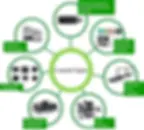
The e-waste management market is expanding swiftly in response to the global surge in electronic waste generation driven by rapid technological advancements and growing consumer demand for electronic devices. Electronic waste poses significant environmental and health hazards due to toxic substances contained within, such as lead, mercury, and cadmium. This critical issue has propelled the development of the e-waste management industry, which focuses on implementing sustainable, efficient, and technologically advanced solutions for the collection, recycling, and disposal of electronic waste.
E-waste management covers an extensive range of processes, including collection, transportation, dismantling, recycling, refurbishment, and disposal. Recycling services dominate the market, aiming to recover precious metals and other materials that reduce reliance on virgin resources and minimize landfill waste. Recent technological innovations such as robotic dismantling, bioleaching, and chemical recycling enhance material recovery efficiency while reducing environmental impact. Moreover, integration of digital technologies like Internet of Things (IoT) devices and Artificial Intelligence (AI) enables better waste tracking, process automation, and regulatory compliance.
Market segmentation broadly includes collection and logistics, recycling and treatment, and disposal services. End-users comprise electronics manufacturers, government entities, waste management companies, and consumers. Extended Producer Responsibility (EPR) schemes are increasingly adopted worldwide, requiring manufacturers to take accountability for the entire lifecycle of their products and encouraging sustainable product design and disposal. This regulatory push, coupled with rising environmental awareness among consumers, drives demand for formalized e-waste management services.
Leading players in the market are investing heavily in R&D to develop eco-friendly recycling methods and expand operational infrastructure. Collaborations between governments, private sector stakeholders, and non-governmental organizations facilitate awareness campaigns and strengthen collection networks. The Asia-Pacific region is a focal point for market growth due to rising electronic consumption, urbanization, and improving regulatory frameworks.
Recent developments highlight the shift toward circular economy models, emphasizing reuse, repair, and material recovery to create closed-loop systems. International policies such as the Basel Convention regulate cross-border e-waste shipments and promote environmentally sound management practices. Innovative digital platforms are emerging, enabling consumers to participate more easily in e-waste collection and recycling programs.
Despite challenges such as informal recycling, lack of global regulatory uniformity, and the complexity of e-waste streams, the market outlook remains strong. Continuous innovation, policy support, and consumer engagement will be essential to overcome these barriers. Overall, the e-waste management market is set to play a pivotal role in transforming electronic waste challenges into opportunities for sustainable growth, resource conservation, and environmental protection worldwide.
About Market Research Future:
Market Research Future (MRFR) is a global market research company that takes pride in its services, offering a complete and accurate analysis regarding diverse markets and consumers worldwide. Market Research Future has the distinguished objective of providing the optimal quality research and granular research to clients. Our market research studies by products, services, technologies, applications, end users, and market players for global, regional, and country level market segments, enable our clients to see more, know more, and do more, which help answer your most important questions.